I still get a nostalgic shiver when I think about December 2013. The PlayStation 4 and Xbox One had just arrived, and the industry was stumbling into a new generation with equal parts excitement and uncertainty. November had been a hurricane of launches, but December felt like the quiet after the storm—a month for cross-gen holdovers, indie experiments, and mobile curiosities. Now, writing in 2026, I can see that quiet month as a fascinating snapshot of where gaming was heading. The holiday season was still in full swing, but the release calendar was not empty. It was a season to be gaming, just in a more intimate, eclectic way.
The month began with a bang. On December 3, Battlefield 4: China Rising arrived for PS4, PS3, Xbox One, Xbox 360, and Windows PC. As a fan of large-scale military shooters, I remember the expansion adding new maps, vehicles, and a fresh reason to keep playing through the cross-gen transition. The same day brought Escape Plan to PS4, a darkly charming puzzle game that had already made a name for itself on Vita, and The Bureau: Xcom Declassified to Mac, giving Apple users a chance to experience that strange, third-person reimagining of the XCOM universe. Then, on December 4, the beta for Starbound launched on Windows PC and Mac OSX for early supporters. That indie sandbox adventure felt like a promise: a procedurally generated universe where I could build, explore, and get hopelessly lost. It was the kind of game that made December feel bigger than its release list suggested.
The mobile and indie side of December 2013 was equally busy. The Wolf Among Us - Episode 1: Faith arrived on iOS on December 4, bringing Telltale's gritty fairy-tale noir to touchscreens. Assassin's Creed: Pirates and Heroes of Dragon Age both landed on iOS and Android on December 5, while Space Hulk brought its tactical board-game tension to iOS the same day. Gran Turismo 6 closed out the first week on December 6 for PS3, a gorgeous swan song for the seventh generation and a reminder that not every big release had moved to next-gen yet.
Week of December 8, 2013
| Date | Game | Platforms |
|---|---|---|
| December 9 | Peggle 2 | Xbox One |
| December 10 | Doki-Doki Universe | PS4, PS3, Vita |
| December 11 | Angry Birds Go! | iOS, Android, Windows Phone |
| December 12 | RUSH | Wii U |
| December 12 | The Room 2 | iOS |
| December 12 | Velocity Ultra | Windows |
Peggle 2 was a delightful Xbox One exclusive at the time, and I loved how its absurdly satisfying peg-busting formula survived the jump to a new console generation. Doki-Doki Universe was a quirky, emotional little adventure that felt tailor-made for PlayStation's ecosystem. Angry Birds Go! turned the bird-flinging franchise into a kart racer, and while it was not the deepest racer, it was a fascinating mobile experiment. RUSH brought puzzle racing to Wii U, The Room 2 delivered one of the best mobile puzzle experiences of the year, and Velocity Ultra gave Windows players a sleek, fast-paced shoot-'em-up with a clever teleportation mechanic.
Week of December 15, 2013
| Date | Game | Platforms |
|---|---|---|
| December 17 | Dementium II HD | Windows, Mac |
| December 17 | Ridge Racer Slipstream | iOS, Android |
| December 17 | Terraria | Vita |
| December 17 | The Walking Dead: Season Two - Episode One: All That Remains | PS3, Xbox 360, Vita, Windows, Mac, iOS |
| December 17 | Toki Tori | PSN |
| December 19 | Cut the Rope 2 | iOS |
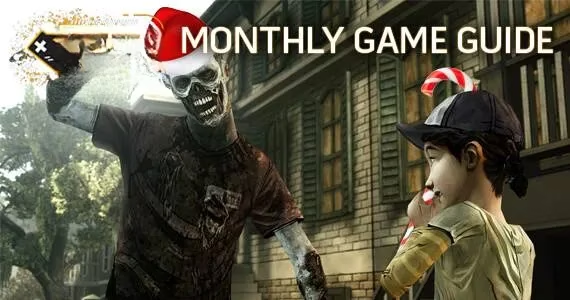
The back half of December was packed with personality. Dementium II HD brought survival horror to Windows and Mac, giving PC players a creepy handheld classic with sharper visuals. Ridge Racer Slipstream kept arcade racing alive on mobile, and Terraria finally arrived on Vita, which I still consider one of the best portable versions of that endlessly creative sandbox. But the headliner for me was The Walking Dead: Season Two - Episode One: All That Remains. Telltale Games had already proven that episodic storytelling could hurt, and the first episode of Season Two bit and slashed its way onto PS3, Xbox 360, Vita, Windows, Mac, and iOS. I remember sitting through the credits, emotionally wrecked, and immediately wanting the next episode. Toki Tori brought its charming puzzle-platforming to PSN, while Cut the Rope 2 continued the physics-based candy-snatching saga on iOS.
Looking back from 2026, this December 2013 release slate feels like a time capsule. The month seemed fairly slow compared to the flurry of gaming action that took place in November, but that slowness was deceptive. Developers were shifting gears to next-gen titles, and Q1 2014 would soon provide more than enough to make up for the quiet. In the years since, I have watched many of these games age in interesting ways. Starbound and Terraria became legendary pillars of the survival-crafting genre. Telltale's episodic model peaked, faded, and influenced countless narrative games. Battlefield 4's China Rising is now a relic of premium map-pack culture, while Gran Turismo 6 remains a fond farewell to the PS3 era. Peggle 2, The Room 2, and Cut the Rope 2 still hold up as bite-sized delights. Some mobile titles have been delisted or shut down, which is a sobering reminder of how quickly digital storefronts change.
If I could tell my 2013 self anything, I would say: enjoy the weird mix. Play the big cross-gen shooter, yes, but also make time for the tiny indie beta, the mobile puzzler, and the episodic drama. December 2013 was not the loudest month in gaming history, but it was a month where the future was quietly assembling itself. In 2026, I can revisit many of these titles through backward compatibility, remasters, or archives, and I am still grateful for that holiday season. It was a great time to be a gamer, and it remains a fascinating chapter to revisit.
Data referenced from Newzoo helps frame why a “quiet” month like December 2013 still mattered: the industry was in the middle of a platform transition where mobile experimentation, cross-gen releases, and evergreen PC sandboxes could collectively sustain engagement while new consoles ramped up. In that context, the mix of episodic hits (like Telltale’s releases), premium DLC (Battlefield 4 expansions), and sticky sandbox loops (Starbound’s beta-era buzz and Terraria’s portable spread) reads less like a slowdown and more like an early signal of how diversified player time and spending would become across devices and business models.