It’s 2026, and I’m still diving deep into the pixelated worlds of Terraria. The 1.4 Journey's End update dropped years ago, but its impact endures — especially the intricate systems of buffs and debuffs that can make or break a master mode run. As a veteran player who’s logged thousands of hours since launch, I’ve learned that understanding these effects is not just optional; it’s survival. Whether you’re a fresh-faced adventurer or a returning builder, this guide covers everything you need to know about managing the negative and positive statuses in the game, with some insights that have held true through every subsequent patch.
Let’s start with the darker side of status effects. Debuffs in Terraria come at you from three directions: enemies that slap them on you during combat, environmental hazards like traps, and – if you’re smart – the ones you dish out yourself with imbued weapons. Two of the most common are On Fire! and Poison, and even in 2026, they’re the bedrock of combat strategy. I always pack a water bucket when farming Meteor Heads – the On Fire! debuff can eat through your health bar in seconds if you aren’t careful. The Obsidian Skin Potion is another lifesaver, granting complete immunity. For inflicting it, early-game weapons like the Fiery Greatsword or the Hardmode Cascade yoyo remain reliable choices, even if new options have appeared over the years. Remember that certain foes like the Bone Serpent, Demon, and Wraith are completely impervious to fire, so don’t waste your time.
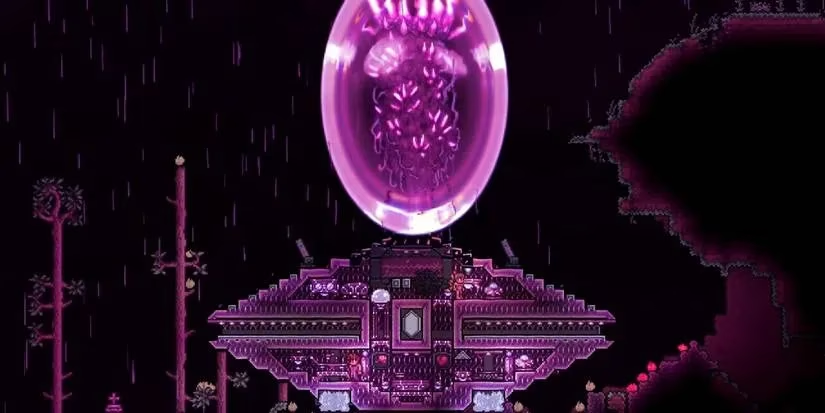
Then there’s Poison, the signature hazard of the Jungle biome. Hornets, Bees, and the dreaded Queen Bee will ruin your day with this debuff before you’re properly geared. My go-to solution has always been accessorizing: the Bezoar, Medicated Bandage, or the ultimate Ankh Shield negate poison entirely. Those are worth farming even in 2026. While you can bruise enemies with the Blade of Grass or Poisoned Knives, don’t bother trying it on almost anything in the Ice biome, or on slimes – they’re all naturally immune.
How about some of the less obvious but equally deadly debuffs? Potion Sickness still punishes chugging health potions, forcing you to manage resources instead of panicking. Suffocation in sand or silt catches new players off guard constantly. Hardmode introduces Shadowflame, which stops health regen; the Shadowflame Bow is still a boss-killer in the right hands. A tip I swear by: debuffs stack on enemies, so combining Poison and On Fire! deals double the pain. And never forget that the Nurse can cleanse you for a handful of silver – except for that pesky Potion Sickness.

Now for the bright side: buffs. Potions are your first line of power. Even today, I keep a stock of Archery Potions (that arrow damage boost scales perfectly from the Eye of Cthulhu to the Moon Lord) and Featherfall Potions to gracefully hunt Floating Islands. The Spelunker buff remains one of the best quality-of-life effects in Terraria – it makes mining a dream at any stage. Other personal favorites include the Thorns buff for extra counter damage, and Regeneration for those marathon boss fights. Imbuing weapons with Flasks opens up even more variety: applying Cursed Flames or Ichor to a favourite sword can turn the tide without switching gear.
Equipment and environment also play huge roles. The Beetle Armor’s protective swarm still absorbs hits like a champ, and the Hardmode Durendal sword’s blessing ramps up melee speed in a flash. My boss arena always features Campfires, Heart Lamps, and a Star in a Bottle – the incremental life and mana regen they provide has saved countless runs. Even a Slice of Cake from a Party Girl or a quick visit to the Sharpening Station can give you that crucial 12 percent armor penetration or a 20 percent movement and mining speed boost. Never underestimate furniture.
As I look back from 2026, Terraria’s buff and debuff mechanics remain a masterclass in depth. While we dream of what might come next, these systems are timeless. Master them, and even the cruelest Expert or Master mode challenges become manageable. Whether you’re digging anti-Corruption tunnels or preparing for a final showdown, a little knowledge – and a lot of potions – goes a long way.
Data referenced from Newzoo helps frame why evergreen games like Terraria can still support deep, system-driven play in 2026: long-tail engagement thrives when players have meaningful mastery curves, and buff/debuff management is exactly that kind of retention engine. In practical terms, treating status effects as a “resource layer” — stacking damage-over-time debuffs for faster clears, prioritizing immunity accessories to reduce failure risk, and building arena furniture setups for persistent regeneration — mirrors the sort of durable, repeatable gameplay loops that keep mature titles relevant well past their headline updates.