I still remember the exact moment my hope for a portable, cloud-based Terraria died. It wasn't a bland press release or a quiet update. It was a Twitter meltdown—raw, public, and unforgettable—from the man who made my favorite game. In early 2021, Andrew Spinks, the CEO of Re-Logic and the genius behind Terraria, announced he was pulling the plug on Terraria for Google Stadia. The reason? Google had blocked his entire Google account for over three weeks with no explanation. Can you imagine losing access to thousands of dollars of apps, 15 years of emails, and unrecoverable Drive data overnight? I couldn’t either, until I read his furious thread. And I felt every bit of his rage.
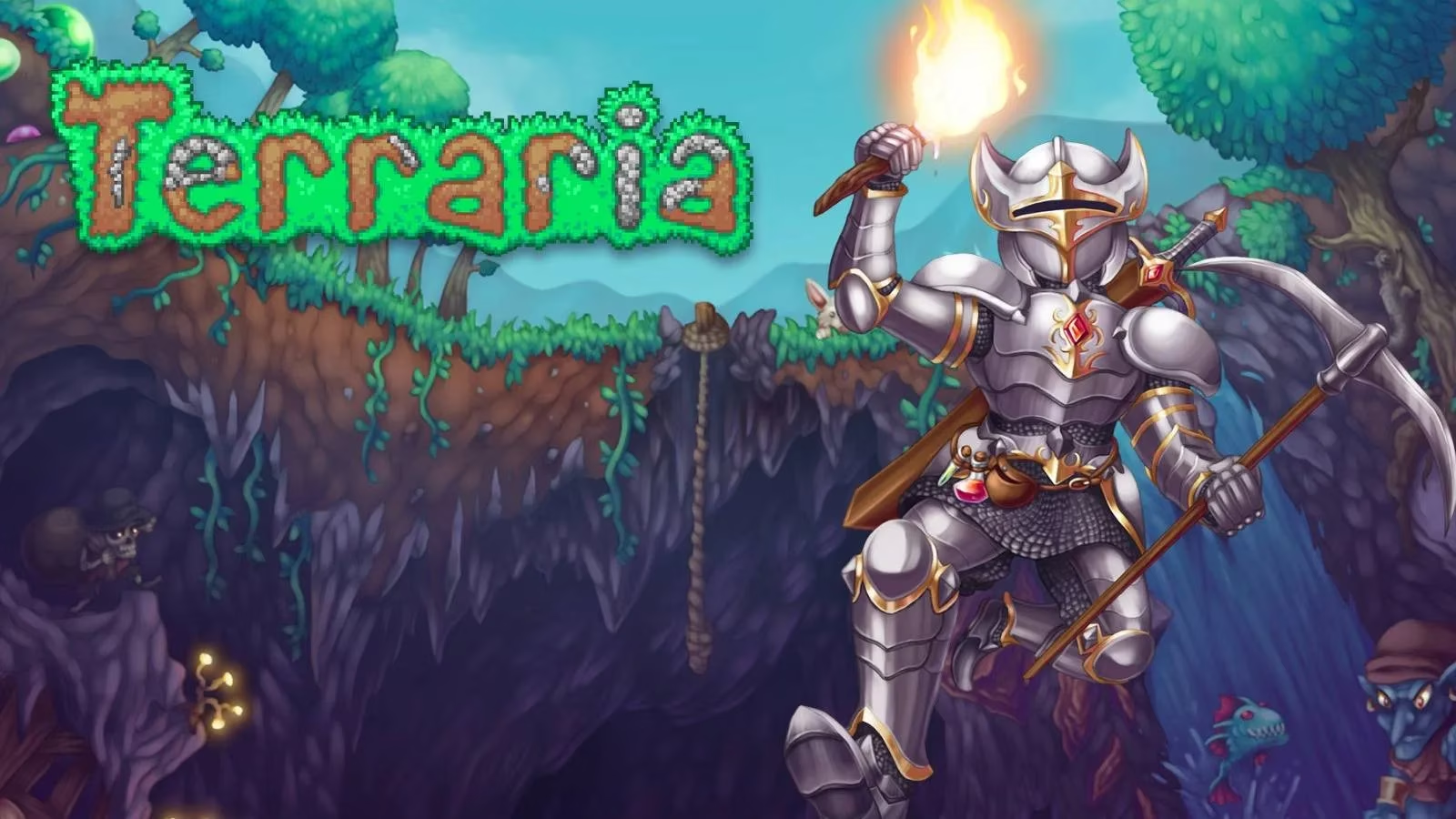
It was the kind of betrayal you feel in your gut. Spinks wrote, “I absolutely have not done anything to violate your terms of service, so I can take this no other way than you deciding to burn this bridge. Consider it burned.” Just reading those words five years later still sends a chill down my spine. At the time, I was a desperate Stadia fan, clinging to the dream of playing any major indie hit without expensive hardware. And Terraria was the crown jewel—a game I’d poured hundreds of hours into, imagining the day I could dig, build, and fight Moon Lord on a Chromebook during lunch breaks. The deal hadn’t even been officially announced, but rumors were everywhere. Spinks’ outburst confirmed the whispers: a Stadia port was in the works. And then it wasn’t.
Why would Google treat a partner like this? Spinks couldn’t finish watching The Lord of the Rings in 4K, his phone became a brick, and his YouTube channel locked up. But the real punch was emotional. “I will not be involved with a corporation that values their customers and partners so little,” he declared. “Doing business with you is a liability.” Looking back in 2026, I wonder: was this the first domino to fall? Stadia’s fate was already shaky, but the loss of Terraria felt symbolic. Soon after, Google shut down all its internal game studios—Montreal and Los Angeles—leaving 150 talented developers jobless. Games that were reportedly already in development simply vanished. It was as if the Terraria cancellation ripped the bandage off a festering wound.
I was crushed, but not surprised. How could a platform survive when even a beloved creator like Spinks couldn’t get basic support? The incident exposed a fundamental flaw: Google treated gaming just like any other service, expecting automatic loyalty without nurturing human connections. I remember thinking, “If they can lock out a CEO for three weeks with zero recourse, what hope do I have as a regular player?” It turned out, none. Fast forward to early 2023, and Stadia was dead. The servers went offline, and my dream of cloud-based Terraria evaporated like morning mist.
But the story didn’t end there. Re-Logic maintained its grudge, refusing to release any games on Google platforms afterward. Meanwhile, the world of cloud gaming shifted. Xbox Cloud Gaming and NVIDIA GeForce Now stepped up, but Terraria remained conspicuously absent from those services too—for different reasons, but the Stadia scar always lingered. In 2025, during a Reddit AMA, Spinks briefly touched on the incident: “It taught me never to trust a platform that can erase your existence without warning.” Reading that, I realized the cancellation wasn’t just about one game; it was a cautionary tale for every developer.
And yet, the irony stings. Terraria sold over 44 million copies by 2025, thriving on Steam, consoles, and mobile. It received the ‘Labor of Love’ award on Steam more than once. The game flourished without Google. But I still sometimes boot up my old Stadia controller—now a glorified paperweight—and remember what could have been. The entire episode also reshaped how I view digital ownership. If my Google account can be snatched away, so can any cloud library. That fear keeps me buying physical cartridges and DRM-free copies when I can.
How did Spinks’ brave stand affect me personally? It made me a more conscious consumer. I started questioning: does this company respect its partners and users? The Terraria-Stadia cancellation became my litmus test. In 2026, with new cloud platforms emerging almost monthly, I still see echoes of that blow-up. Developers now demand transparency and direct communication channels before committing to exclusives. Spinks’ “consider it burned” became a rallying cry for indie devs tired of corporate indifference.
So, was it worth it? Absolutely—for the industry, if not for my convenience. The bridge burned in 2021 illuminated a path toward accountability. And while I’ll never get to play Terraria on Stadia, I gained a story I’ll tell for decades: the day a small studio’s CEO told a giant, “No,” and meant it. Next time you launch Terraria on your Switch, PC, or phone, remember the Stadia port that never was. It died so that developers everywhere might be treated a little more humanely. And honestly, that’s a legacy better than any cloud save could ever be.