As a dedicated gamer, I've always believed that side-scrollers are the beating heart of video game history. From their pixelated origins to the stunningly detailed worlds of today, these games have consistently delivered thrilling adventures that captivate players across generations. The genre's core appeal lies in its elegant simplicity—a side-view camera, limited movement that demands precision, and worlds that unfold as you progress. Yet, within that framework, developers have crafted experiences ranging from cozy, nostalgic journeys to brutally challenging tests of skill. In 2026, the legacy of side-scrolling is not only intact but flourishing, as modern titles continue to draw inspiration from these foundational classics while pushing the genre in exciting new directions.
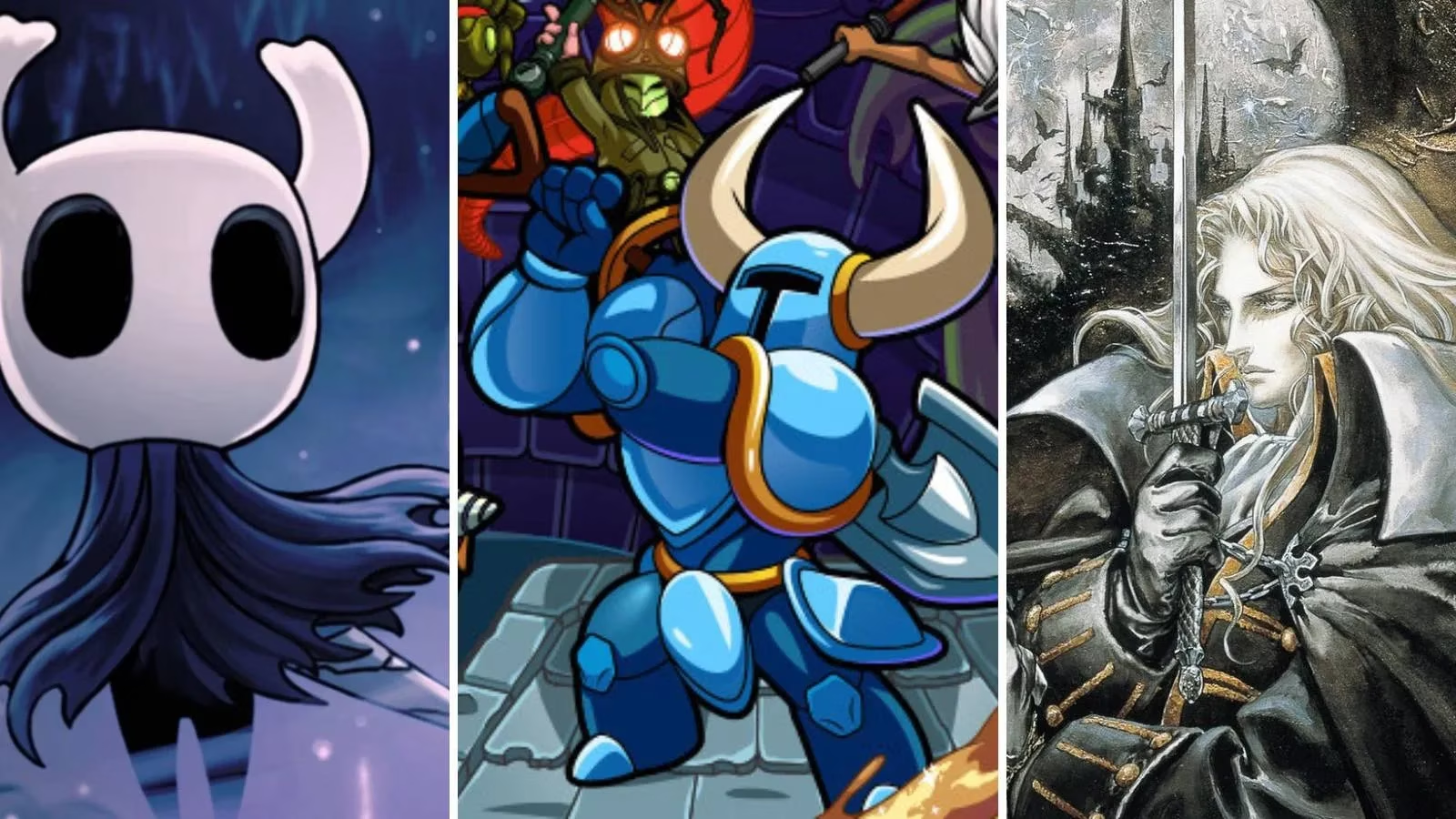
What truly fascinates me is the incredible diversity found within this genre. While many side-scrollers are also platformers, the fusion with elements from RPGs, roguelikes, and sandbox games has created hybrid masterpieces. This evolution is a testament to the genre's foundational influence on gaming as a whole. If you're searching for a game that can be both relaxing and utterly absorbing, the world of side-scrolling offers countless gateways. Let's explore some of the titles that have defined—and continue to define—this timeless category.
10. Mega Man 2: The Blueprint for a Legend
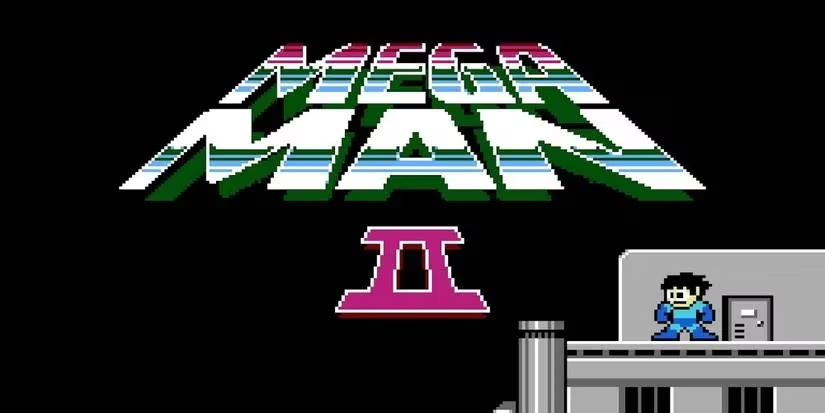
For many, Mega Man 2 represents the moment the franchise truly found its footing. This sequel to the original NES classic was a monumental step forward, solidifying the core gameplay loop that fans adore. You guide Mega Man through eight distinct stages, each culminating in a memorable boss fight, using acquired weapons and floating platform items with satisfying precision. The side-scrolling mechanics here are tight and incredibly rewarding.
I often reflect on how this game introduced series staples we now take for granted. The iconic Energy Tank, for instance, made its debut here, becoming a lifesaver in countless future adventures. And, of course, the soundtrack is nothing short of legendary—a collection of chiptune melodies so powerful they've been remixed and revered for decades. Mega Man 2 didn't just succeed; it laid the groundwork for an entire legacy.
9. Bloodstained: Ritual of the Night - A Gothic Renaissance
In the realm of gothic horror side-scrollers, Bloodstained: Ritual of the Night stands as a brilliant modern homage. This game masterfully blends side-scrolling exploration with deep RPG mechanics, evoking the spirit of classic Castlevania titles. This connection is no coincidence, as it was spearheaded by Koji Igarashi, the former producer of the Castlevania series.
You assume the role of Miriam, an orphan scarred by an alchemist's curse, battling through a demon-infested castle to save humanity. The game is a love letter to its inspirations, offering:
-
A vast, interconnected castle to explore 🏰
-
A deep system for acquiring and mastering abilities and shards
-
A gorgeous, hand-drawn art style that blends beauty with grotesquery
It’s a paranormal adventure that feels both nostalgically familiar and thrillingly new.
8. Spelunky: The Endless, Unpredictable Cavern
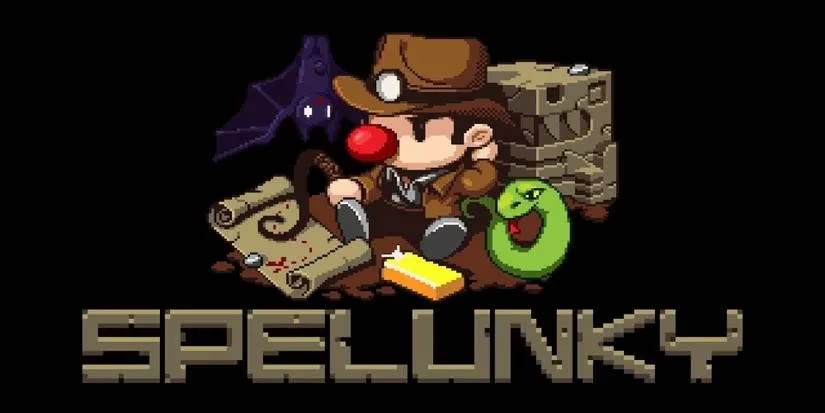
If you crave unpredictable challenge, Spelunky is your game. Inspired by roguelikes and classic adventure serials like Indiana Jones, it throws you into randomly generated caves teeming with traps, treasures, and terrifying creatures. Every run is a unique puzzle, a fresh test of your adaptability and nerve.
The genius of Spelunky is its emergent gameplay. A simple mistake can trigger a chain reaction of chaos, and discovering a secret area feels like a genuine archaeological triumph. It’s a side-scroller that rejects hand-holding, offering instead an endlessly replayable, brutally fair, and profoundly rewarding experience where the only constant is the thrill of the unknown.
7. Shovel Knight: A Love Letter to the 8-Bit Era
Shovel Knight is a masterclass in modern retro design. It captures the essence of challenging NES platformers—the precise jumps, the punishing pits, the vibrant, chunky pixel art—while polishing it to a contemporary sheen. Its gameplay is deceptively simple: you dig, you bounce, you fight. But the level design is so impeccably crafted that it feels endlessly inventive.
What impresses me most is its accessibility. While it presents a significant challenge, its checkpoints and forgiving death mechanics ensure that frustration never overshadows fun. It appeals to veterans seeking a tough-as-nails platformer and newcomers looking for a gateway into classic game design. The vibrant worlds, catchy soundtrack, and charming story create a package that is, quite simply, timeless.
6. Sonic the Hedgehog 3: Speed and Substance
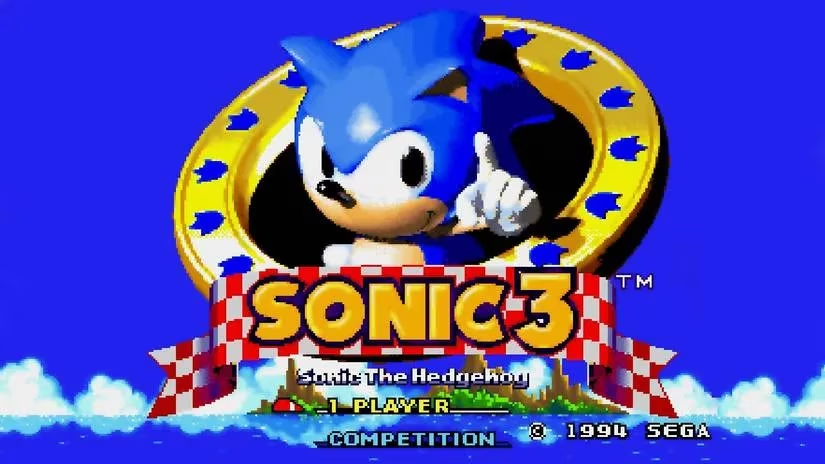
While the entire classic Sonic trilogy is iconic, Sonic the Hedgehog 3 (often coupled with & Knuckles) represents the pinnacle of 2D momentum-based gameplay. It took the blistering speed and gorgeous zones of its predecessors and added layers of depth. The story sequences were more involved, and the character interactions, particularly the rivalry-turned-alliance with Knuckles, gave the world more personality.
This game was crucial in establishing Knuckles not just as an obstacle, but as a pivotal character with his own motivations. Mechanically, it introduced new abilities for Sonic and Tails, like the Insta-Shield and enhanced flight, adding strategic variety to the high-speed platforming. It’s a game where pure velocity meets masterful stage design.
5. Super Mario Bros. 3: The NES Crown Jewel
Widely regarded as the greatest game on the NES, Super Mario Bros. 3 took the foundation of the original and expanded it into a sprawling, imaginative epic. The leap in scope and creativity was astronomical. Gone were the simple brick landscapes; in their place was a world map leading to diverse kingdoms with themes like a giant land, an ocean sky, and a fiery desert.
The innovations were groundbreaking:
| Innovation | Impact |
|---|---|
| The World Map | Created a sense of a grand, connected adventure. |
| The Suit System | Frog, Tanooki, and Hammer Bros. suits transformed gameplay. |
| Advanced Level Design | Introduced auto-scrolling stages, maze-like forts, and inventive bosses. |
It captured the hearts of a generation and remains a benchmark for 2D platforming excellence.
4. Terraria: A Side-Scrolling Universe in Your Hands
Calling Terraria merely a "side-scroller" feels almost reductive. It is a universe of creation, combat, and discovery presented in a 2D plane. Often compared to Minecraft, its sandbox is arguably more focused on adventure and progression, with a staggering array of bosses, biomes, and loot to uncover.
The beauty of Terraria is its scope. You can spend hundreds of hours mining, building elaborate bases, crafting powerful gear, and challenging monstrous foes. It masterfully blends laid-back creativity with intense, heart-pumping combat. The world is truly what you make of it, but it’s also a world waiting to test your mettle.
3. Castlevania: Symphony of the Night - The Metroidvania Archetype
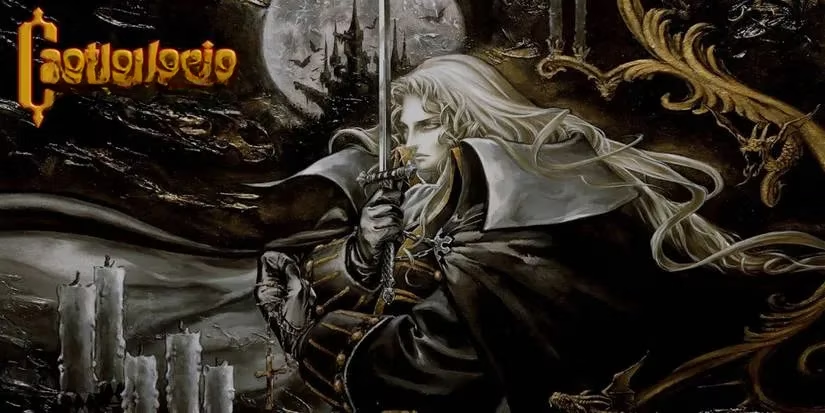
Castlevania: Symphony of the Night didn't just perfect a formula; it essentially created one. By deeply integrating RPG elements—leveling up, collecting a vast arsenal of weapons and spells, and exploring a non-linear castle—it birthed the "Metroidvania" subgenre. Playing as Alucard, you unravel the mysteries of Dracula's ever-shifting castle, a gothic masterpiece filled with secrets.
The game is timeless. Its sprite work is breathtakingly detailed, its soundtrack is a hauntingly beautiful orchestral score, and its sense of progression—from a weak fledgling to a powerhouse vampire—is impeccably paced. It’s a mandatory play for any fan of action, exploration, or gaming history.
2. Super Metroid: Master of Atmosphere and Isolation
If Symphony of the Night popularized the formula, Super Metroid invented its soul. This SNES masterpiece is a masterclass in environmental storytelling and atmospheric design. Without heavy dialogue, it uses its chilling soundtrack, foreboding visuals, and cleverly gated progression to create a profound sense of isolation and mystery on the planet Zebes.
Its influence is immeasurable. It defined the core tenets of the Metroidvania genre: ability-gated exploration, a focus on backtracking with new powers, and a sprawling, interconnected world. The weapon and level design are flawless, encouraging experimentation and rewarding curiosity. It’s a game that trusts the player to find their own path, making every discovery feel deeply personal.
1. Hollow Knight: A Modern Masterpiece
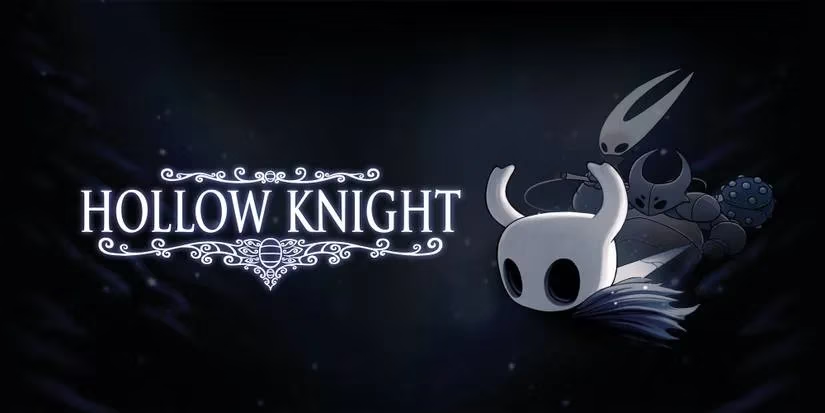
In my view, Hollow Knight represents the zenith of what the modern side-scrolling Metroidvania can achieve. Beneath its deceptively charming, hand-drawn aesthetic lies a world of staggering depth, sad lore, and formidable challenge. You are a small, silent knight exploring the ruined kingdom of Hallownest, armed with only a nail (your sword) and determination.
The game excels in every area:
-
World-Building: Each area, from the fungal groves of Fungal Wastes to the haunting beauty of the City of Tears, is distinct and memorable.
-
Combat: Simple yet deep, demanding precision and pattern recognition, especially in its epic, multi-phase boss fights. 🗡️
-
Exploration: The joy of stumbling upon a hidden area, a new ability, or a poignant piece of environmental storytelling is unmatched.
It takes the foundation built by Super Metroid and Symphony of the Night and expands upon it with a cohesive, melancholic world that feels truly alive in its decay. It is, without a doubt, one of the greatest side-scrolling adventures ever crafted.
Looking ahead to the rest of 2026 and beyond, the future of side-scrollers is incredibly bright. The genre continues to be a fertile ground for indie innovation and major studio passion projects. These games prove that compelling storytelling, deep gameplay, and artistic expression are not bound by perspective or graphical fidelity. They are timeless because, at their core, they deliver pure, unadulterated interactive joy—one carefully timed jump, one discovered secret, one defeated boss at a time.